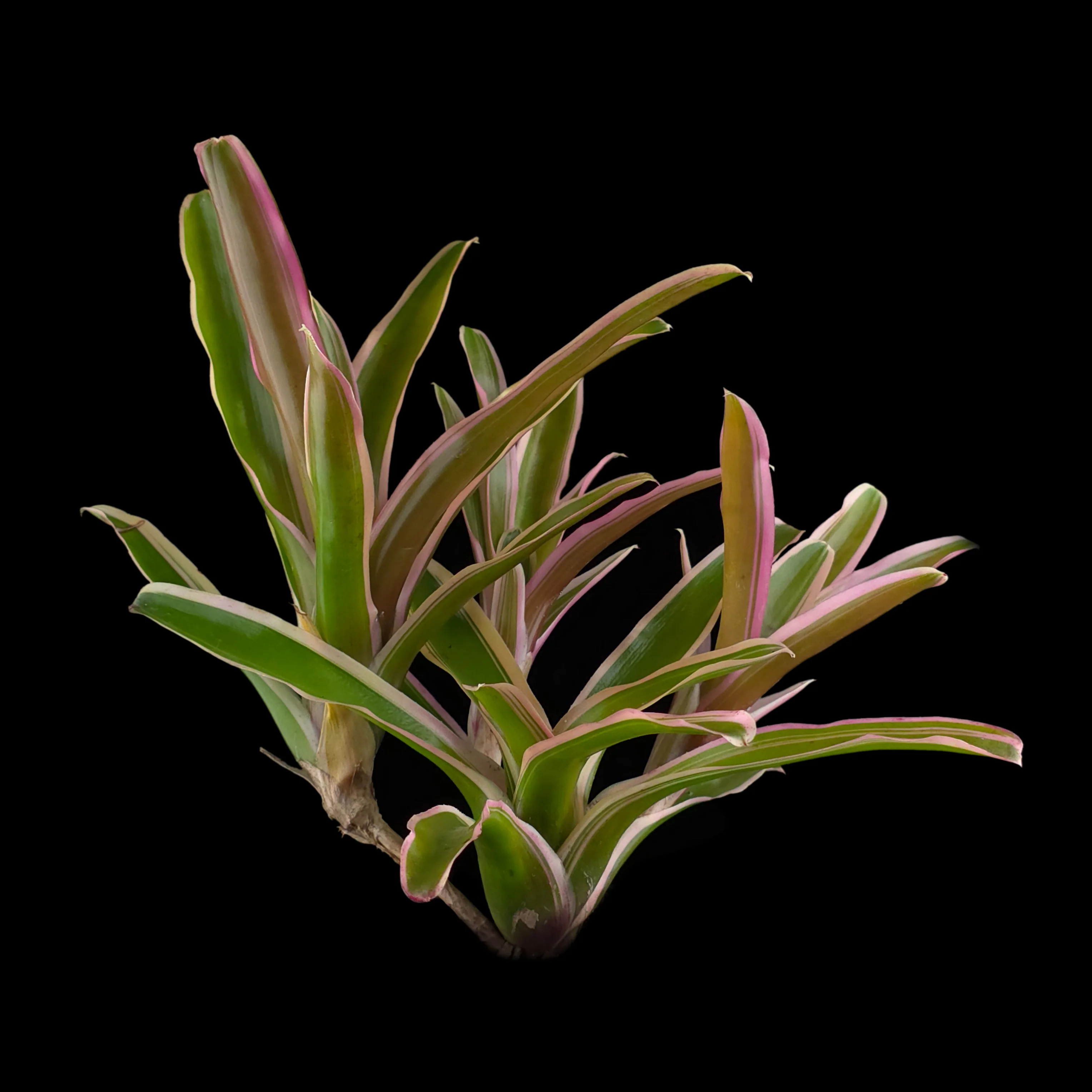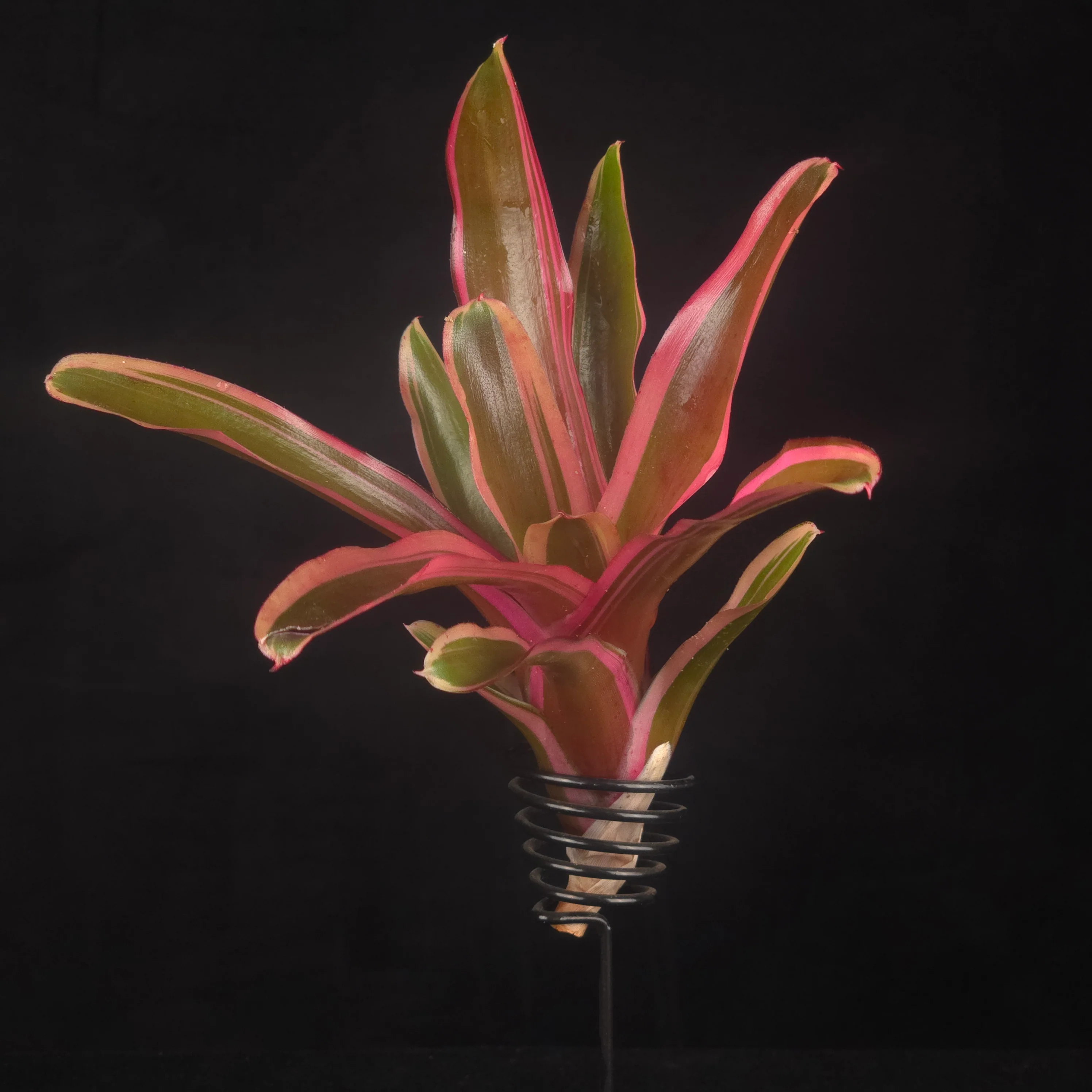


Neoregelia Tiny Tot pauciflora
Neoregelia pauciflora is a compact bromeliad species native to the Atlantic Forest of Brazil, where it grows naturally as an epiphyte on tree branches in warm, humid forests. Its species name means "few-flowered," referring to its relatively small floral display, although like all Neoregelia, the colourful foliage remains the main attraction.
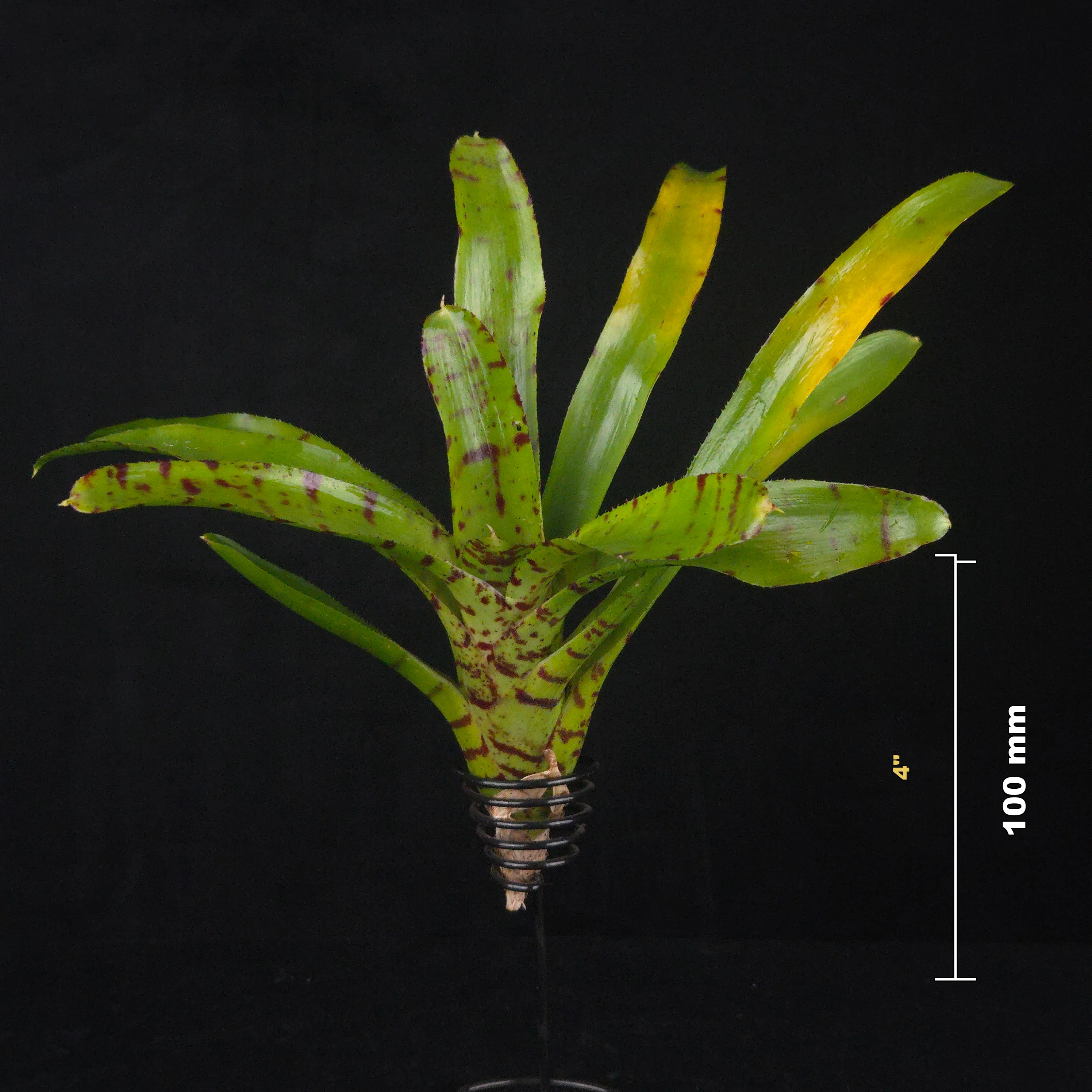
This listing is for a bare-rooted pup (offset). These young plants are removed from established stock plants and supplied without a pot or growing media. Once planted, they establish readily and develop into attractive mature rosettes that will eventually flower and produce pups of their own.
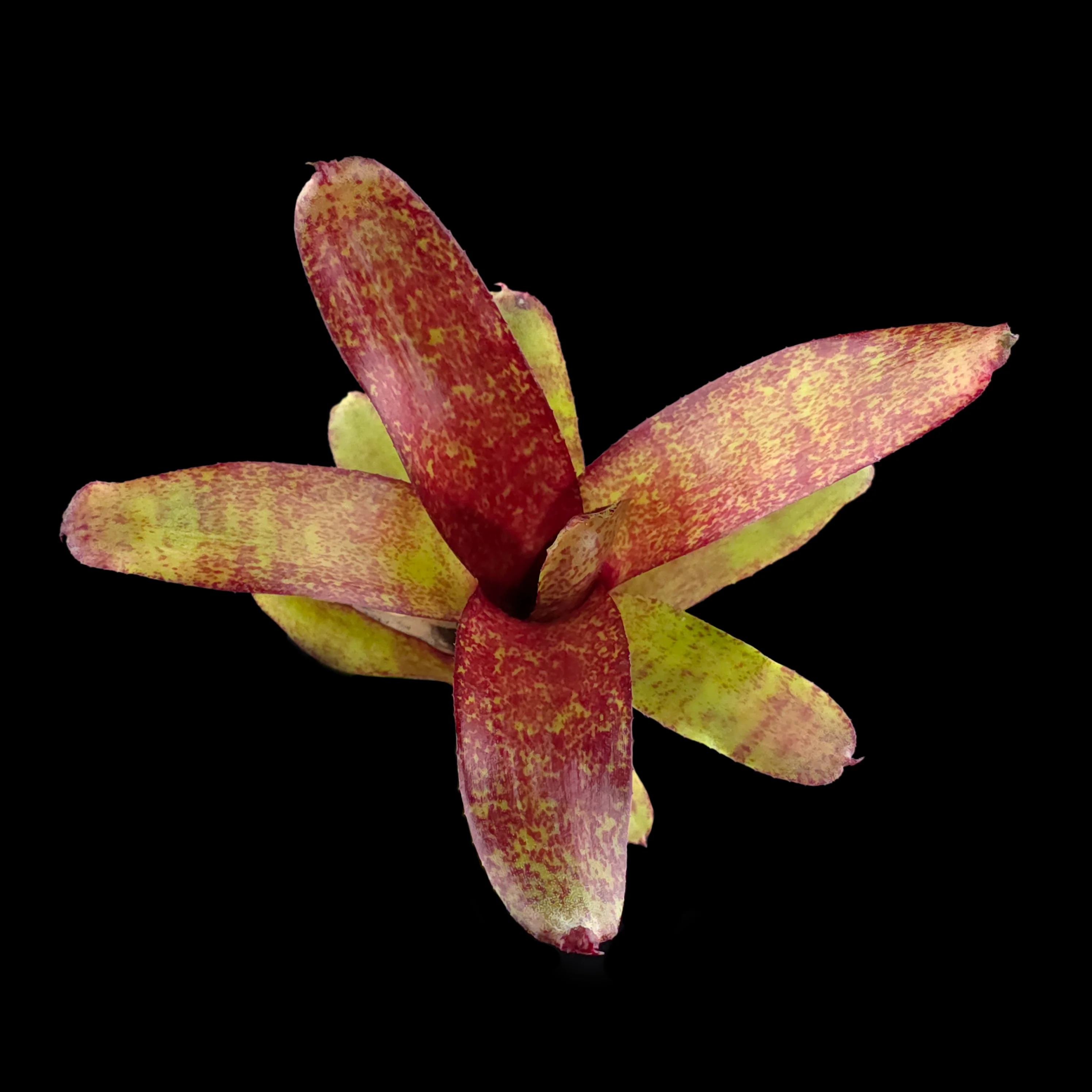
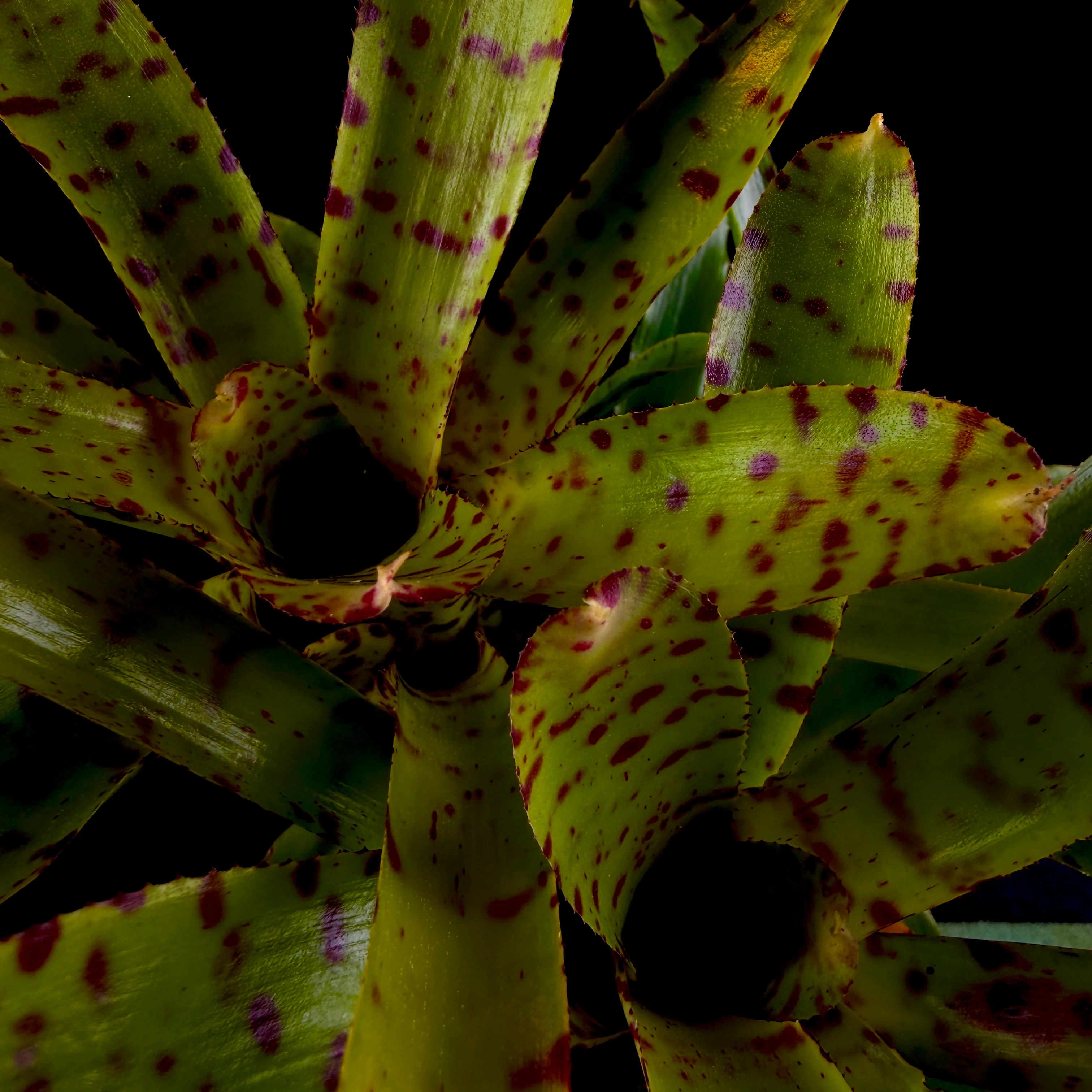
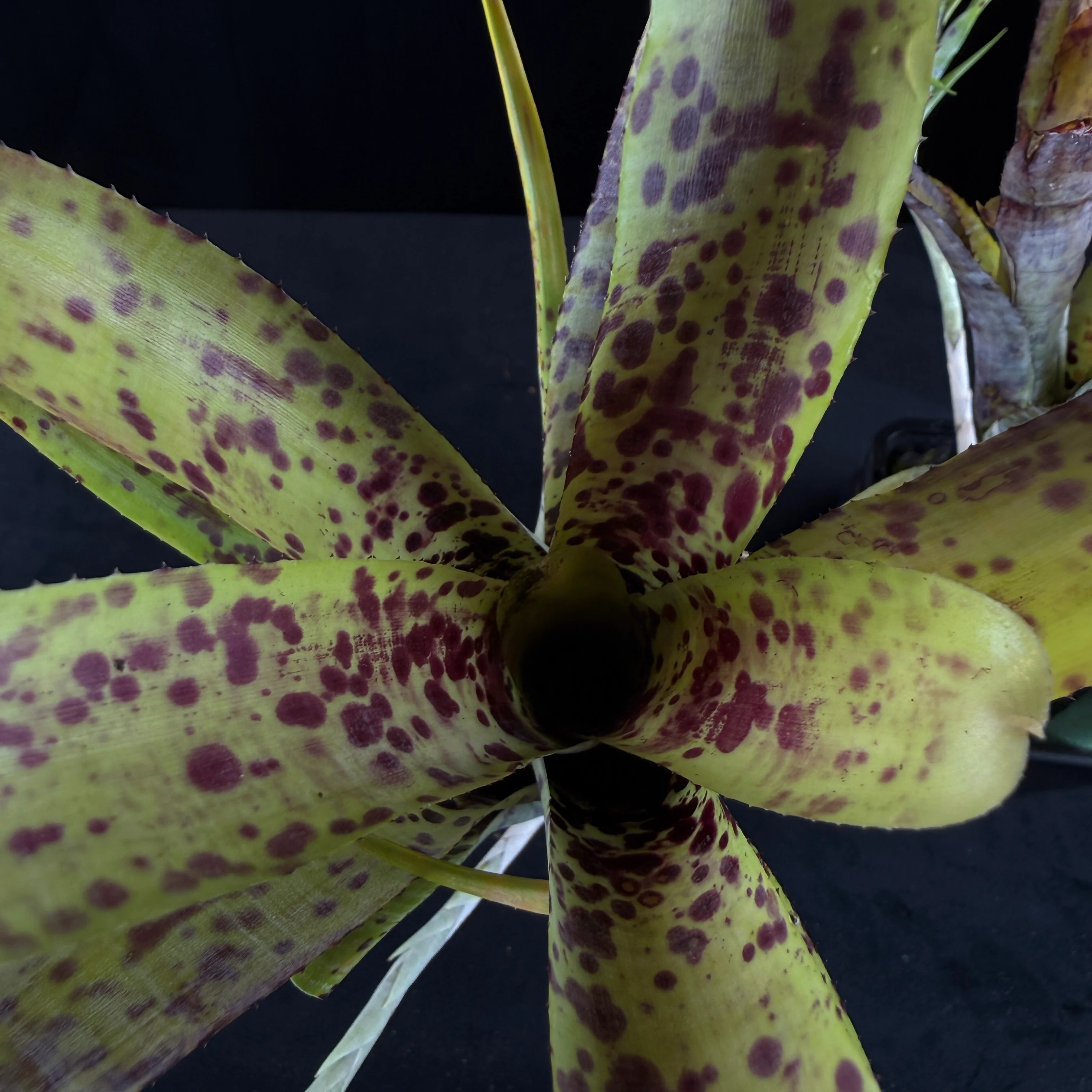
Neoregelia pauciflora forms a graceful, arching rosette with narrow green leaves attractively marked with burgundy spotting. As the plant matures, the markings become more pronounced, particularly when grown in bright, filtered light. Each rosette flowers only once before naturally producing offsets from the base, gradually forming a clump over time.
This species is ideal for mounting onto cork or timber, growing in shallow pots, or incorporating into tropical displays, terrariums and vertical gardens. Its compact size and easy-going nature make it an excellent bromeliad for both beginners and experienced collectors.
Care Tips:
- Light: Bright, filtered light. Good light encourages compact growth and stronger spotting.
- Water: Keep the central cup filled with fresh water and flush regularly. Keep the growing media lightly moist but never waterlogged.
- Humidity: Prefers moderate to high humidity but adapts well to average indoor conditions.
- Media: Plant into a coarse, free-draining bromeliad mix or mount onto cork or timber.
- Fertiliser: Apply a very dilute liquid fertiliser during active growth.
- Temperature: Best grown between 15–28 °C. Protect from frost.
- Growth: Supplied as a young pup that will mature into a flowering rosette before naturally producing offsets.
- Repotting: Offsets can be separated once they reach around one-third to one-half the size of the parent plant, or left attached to form an attractive clump.
Product Information
Product Information
Shipping & Returns
Shipping & Returns
Description
Neoregelia pauciflora is a compact bromeliad species native to the Atlantic Forest of Brazil, where it grows naturally as an epiphyte on tree branches in warm, humid forests. Its species name means "few-flowered," referring to its relatively small floral display, although like all Neoregelia, the colourful foliage remains the main attraction.
This listing is for a bare-rooted pup (offset). These young plants are removed from established stock plants and supplied without a pot or growing media. Once planted, they establish readily and develop into attractive mature rosettes that will eventually flower and produce pups of their own.
Neoregelia pauciflora forms a graceful, arching rosette with narrow green leaves attractively marked with burgundy spotting. As the plant matures, the markings become more pronounced, particularly when grown in bright, filtered light. Each rosette flowers only once before naturally producing offsets from the base, gradually forming a clump over time.
This species is ideal for mounting onto cork or timber, growing in shallow pots, or incorporating into tropical displays, terrariums and vertical gardens. Its compact size and easy-going nature make it an excellent bromeliad for both beginners and experienced collectors.
Care Tips:
- Light: Bright, filtered light. Good light encourages compact growth and stronger spotting.
- Water: Keep the central cup filled with fresh water and flush regularly. Keep the growing media lightly moist but never waterlogged.
- Humidity: Prefers moderate to high humidity but adapts well to average indoor conditions.
- Media: Plant into a coarse, free-draining bromeliad mix or mount onto cork or timber.
- Fertiliser: Apply a very dilute liquid fertiliser during active growth.
- Temperature: Best grown between 15–28 °C. Protect from frost.
- Growth: Supplied as a young pup that will mature into a flowering rosette before naturally producing offsets.
- Repotting: Offsets can be separated once they reach around one-third to one-half the size of the parent plant, or left attached to form an attractive clump.